Heavy haulage for mining and the raw materials industry
In mining, every hour of machine downtime costs real money – and the sites are rarely next to a motorway. Oversize Transports brings mining equipment and processing technology with individual weights of up to 200 tonnes to where extraction happens: to open-cast mines and underground mines in the EU, in Turkey, in the Caucasus and in the raw materials regions of Central Asia. Operators, plant builders and equipment dealers receive door-to-door handling including feasibility study, permits, customs and loading coordination – including on the last mile away from surfaced roads.
Typical mining loads
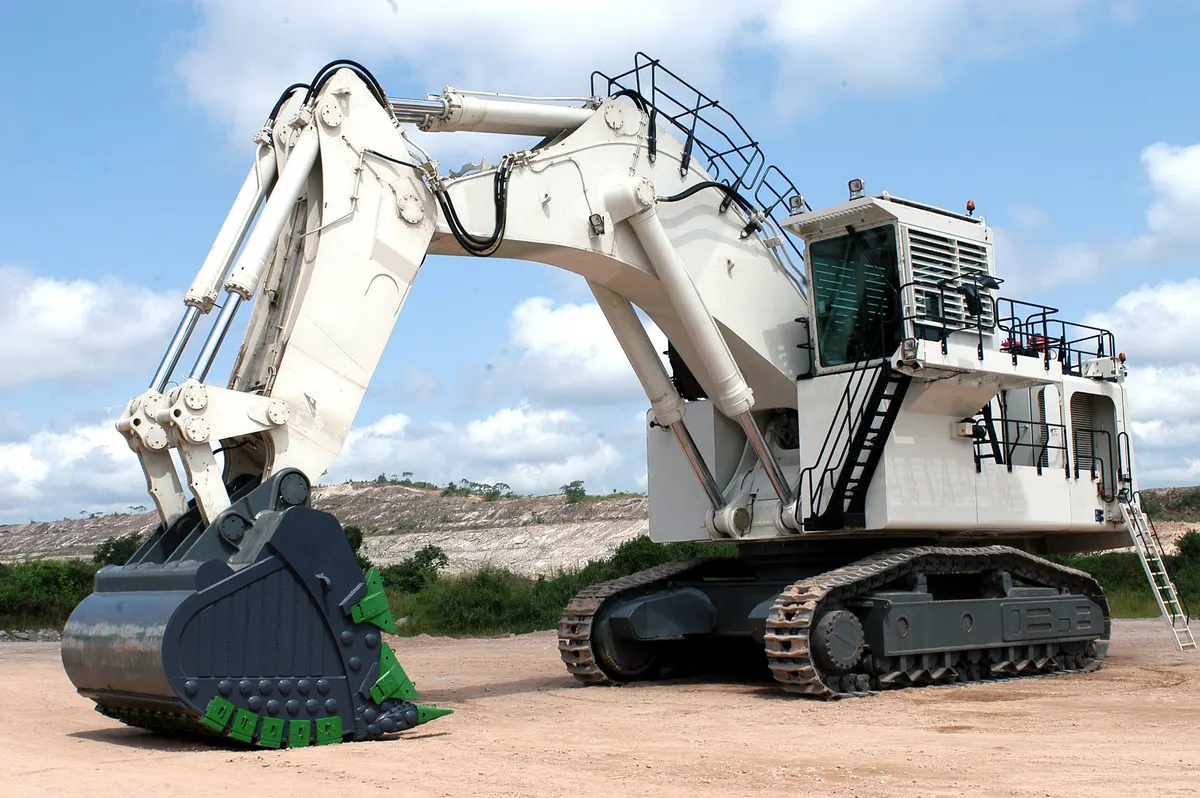
- Large mobile equipment: haul trucks, hydraulic excavators, wheel loaders and drill rigs – complete or dismantled, depending on size
- Processing technology: crushers, mills and mill components, screening plants, ore processing modules
- Conveying technology: conveyor systems, drive stations, bucket elevators, loading equipment
- Underground equipment: loaders, drill jumbos and support components
- Large spare parts: axles, dump bodies, booms and drive units as individual transports in the event of a breakdown
Process: from the feasibility study to the mine
First we assess the feasibility of the entire route: bridge load ratings, headroom, gradients and curve radii – all the way to the unsurfaced access to the operating point. You then receive a fixed-price quote for the complete chain. In the second step we obtain all permits: the authorisation under StVO §29 in Germany and the corresponding procedures in all transit countries, including BF3/BF4 escort vehicles and official conditions. For the transport itself, a dedicated project manager takes control, keeps you informed about every stage and is available 24/7 – even when unloading at the mine takes place at the weekend.
Equipment and the last mile
We use low-loaders and semi low-loaders for self-propelled equipment as well as modular trailers for the heaviest components such as mill or crusher modules. Where haul trucks are delivered dismantled, we dispatch chassis, dump body and attachments as a coordinated vehicle group so that on-site assembly can begin without waiting times. For mine sites away from the public network we clarify axle loads, ground conditions and turning areas in advance – with a site survey where necessary – and coordinate cranes and handling equipment at destination.
Avoiding downtime: spare parts and breakdown logistics
If a mill or a crusher fails in processing, every day counts: a single large spare part then determines the output of the entire site. For such cases we dispatch individual transports with priority – from providing a vehicle at short notice, through accelerated permit procedures as far as the authorities allow, to unloading during ongoing operations. Realistic statements instead of wishful dates: we tell you in advance which stages can be accelerated and which deadlines are immovable.
New-build and expansion projects, by contrast, depend less on individual express transports than on reliable series: processing plants consist of dozens of oversize components that have to arrive in assembly sequence. We plan such project series together with the plant builder and the site management, keep loading lists and delivery notes consistent and agree buffer areas on site, so that neither the assembly waits for components nor the storage area overflows.
The raw materials regions of the Caucasus and Central Asia
Copper, gold, uranium, coal: many expansion and greenfield projects today are located in Kazakhstan, Uzbekistan, Georgia or Armenia. We serve these destinations via the Middle Corridor (Turkey–Georgia–Caspian Sea) and thereby completely avoid the sanction-affected routes through Russia and Belarus. We check the sanctions situation – including goods-related restrictions – before every shipment; only permissible goods are carried, under permissible procedures. We handle customs and transit clearance with T1 or TIR throughout, so that your equipment arrives at the mine without unplanned waiting times at borders.