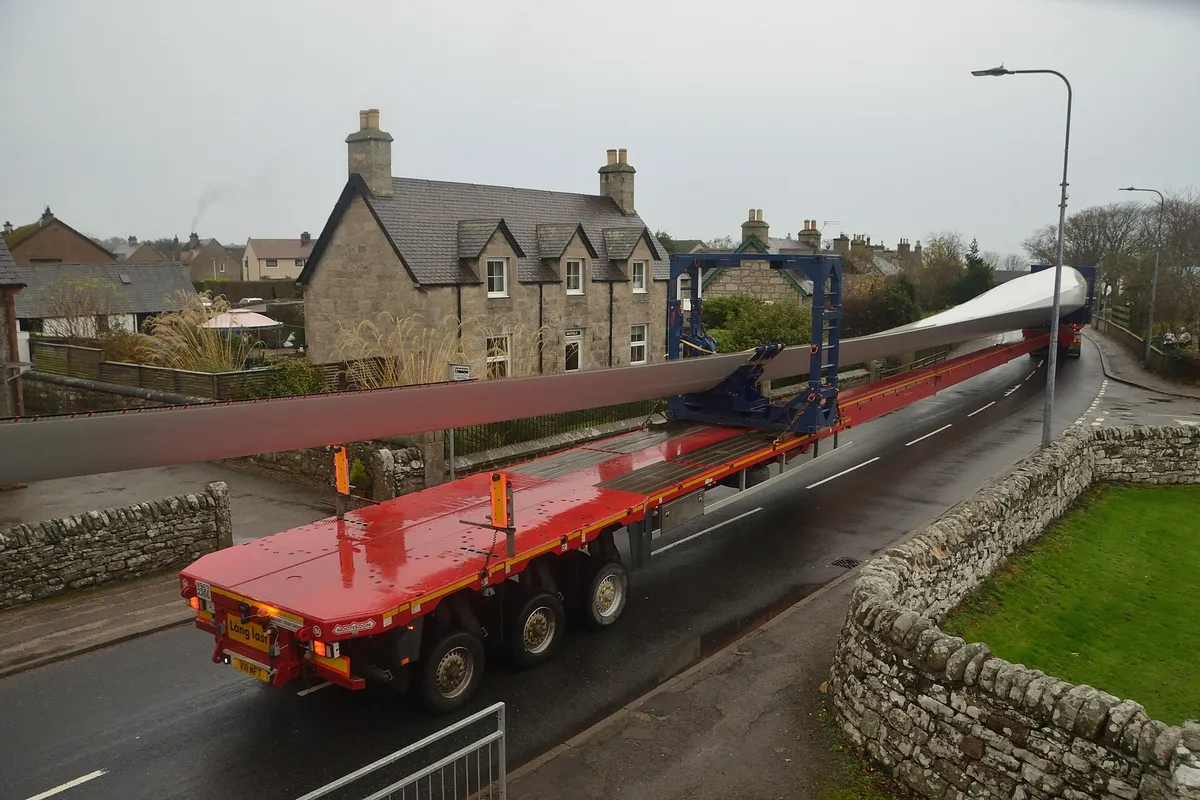
Heavy haulage planned as a project – not as a load to shift
Construction machinery, transformers, presses, vessels, plant components: as soon as a load exceeds the permissible dimensions or weights, a standard truck is no longer enough. Oversize Transports plans and moves heavy haulage up to 200 tonnes – with our own feasibility study, permit management, escort vehicles and crane coordination. After the assessment you receive a fixed-price quotation and a personal project manager who is available around the clock.
When is a load a heavy haulage movement?
A transport becomes permit-liable when it exceeds the limits of normal road traffic – in Germany, as a rule, above 2.55 m width, 4.00 m height, 16.50 m length for an articulated vehicle (18.75 m for a drawbar combination) or above 40 t permissible gross weight (44 t in combined transport). A permit under StVO §29 (German road traffic regulations) is then required, often combined with conditions on route, driving times and escorts. We check for you whether your load falls into this category – and whether conditions can be avoided by partial dismantling or different equipment.
Scope of services
- Feasibility study and route survey: bridge capacities, clearance heights, roundabouts and bottlenecks are checked before we quote – no surprises at kilometre 300.
- Permit management: the permit under StVO §29 including all conditions; for cross-border projects, the equivalents in the transit countries.
- Equipment to suit the load profile: low-loaders for construction machinery, semi-low-loaders for tall cargo, modular trailers for concentrated loads up to 200 t.
- BF3/BF4 escort vehicles as per the permit notice, coordinated with the police and the authorities.
- Crane and loading coordination: we time crane provision, load securing and the slots at the loading and unloading points.
- Door-to-door project management with one dedicated contact for the entire duration.
The process in three steps
1. Establish feasibility
You send us the dimensions, weight, centre of gravity and the two addresses. We examine route options, equipment and likely conditions – and then give you a fixed price. Any indicative figures given in advance are non-binding ranges, depending on route, weight and permit situation.
2. Permits and dispatch
We apply for the permit, dispatch the vehicle and escort to the approved driving times – often night windows – and coordinate crane and personnel at both ends.
3. Execution with project management
During the transport your project manager keeps you informed at every stage, until the load has been set down and handed over at the destination.
Typical loads
Our most frequent heavy haulage movements include excavators, wheel loaders and crawlers between sites and dealers, machine tools and presses for production relocations, transformers for substations, vessels and silos for the process industry, and structural steel and concrete elements for bridge and hall projects. Each of these cargo types makes different demands: with an excavator it is the loading ramp and the track bearing surface that count, with a transformer the low-vibration run and the centre of gravity, with a silo the height under bridges. These differences feed into our choice of vehicle, load securing and route – not on the day of loading.
Equipment: the right vehicle determines cost and conditions
A vehicle that is too large costs money unnecessarily; one that is too small puts the cargo and the permit at risk. Low-loaders with a low deck height keep tall cargo below critical bridge clearances; modular trailers distribute concentrated loads across many axle lines and make weights movable that conventional combinations cannot handle. We make this selection in the feasibility study – it determines route, conditions and price alike.
Cross-border too
If the route does not end at the German border, we continue the project as international heavy haulage: with permit chains across all transit countries, customs and transit handling and corridor experience towards Turkey, the Caucasus and Central Asia.