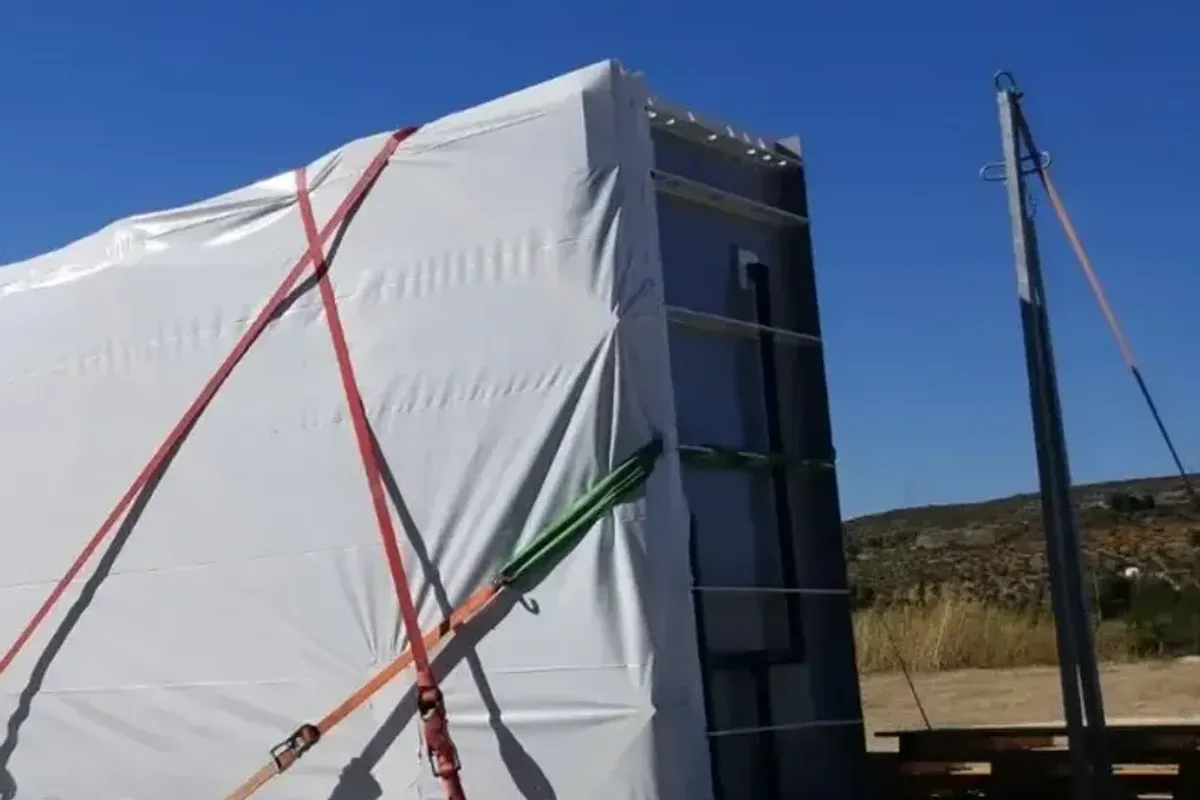
Cross-border heavy lift projects with an unbroken permit chain
The moment a heavy haulage movement crosses a border, the planning effort multiplies: every transit and destination country requires its own special permits, its own escort conditions and its own customs procedures. This is precisely where Oversize Transports comes in. We organise international heavy haulage up to 200 tonnes as end-to-end projects – from the feasibility study through the complete permit chain to unloading at the destination. Our focus: EU-wide, plus the specialist corridors to Turkey, the Caucasus (Georgia, Armenia, Azerbaijan) and Central Asia (Kazakhstan, Turkmenistan, Uzbekistan).
Scope of services for international heavy lift projects
- Permit management along the entire route: the special permit under German road traffic regulations (StVO §29) plus its equivalents in every transit and destination country – timed so that no permit expires before the next one takes effect.
- Route survey and feasibility study: bridge capacities, clearance heights, bottlenecks and border crossings equipped for heavy loads are all checked before we quote.
- Equipment: low-loaders, semi-low-loaders and modular trailers, matched to the weight, centre of gravity and dimensions of the cargo.
- BF3/BF4 escort vehicles (German escort classification) in Germany, plus the organisation of country-specific escort rules along the route.
- Customs and transit handling: T1 transit procedure, TIR Carnet and ATA Carnet, including coordination at the border crossings.
- Crane and loading coordination at the loading and unloading points, plus door-to-door project management.
How your international heavy lift project runs
1. Feasibility study
Based on dimensions, weight and load distribution, we examine route options across every country involved – including bridge classes, height profiles and suitable border crossings. Only then do you receive our quotation as a fixed price; any indicative figures we give beforehand are non-binding ranges, depending on route, weight and permit situation.
2. Permit chain and customs preparation
We apply for the permits in all countries in parallel and synchronise validity periods, night-driving conditions and escort requirements. At the same time we prepare the customs documents: T1 or TIR Carnet for transit, ATA Carnet for temporary admission – for exhibition machinery or construction equipment, for example.
3. Transport with personal project management
Throughout execution you have a dedicated contact who is available around the clock, attends border clearance and keeps you informed at every stage – right through to coordinated crane unloading at the destination.
Typical cargo and industries
The core of our international heavy lift projects comes from plant and mechanical engineering and the energy sector: transformers and switchgear for grid and power plant projects, presses and machine tools for factory relocations, vessels, boilers and columns for the process industry, construction machinery and drilling rigs for infrastructure projects along the corridors. Many of these projects have one thing in common: the delivery date hinges on an installation window at the destination – which is why we plan backwards from the erection date and time permits, ferry departures and crane provision accordingly.
Corridors towards Turkey, the Caucasus and Central Asia
For destinations in the Caucasus and Central Asia we plan primarily via the Middle Corridor: Turkey – Georgia – Caspian Sea with a ferry connection to Kazakhstan or Turkmenistan. The ferry passage is a planning element in its own right: sailing frequencies, weather windows on the Caspian Sea and clearance in the ports feed into our transit time calculation from the outset – not once the cargo is already standing on the quay. This route avoids Russia and Belarus entirely and is therefore free of sanctions constraints. Where alternative routings would touch sanctioned territory, we check the permissible goods and procedures for each individual consignment; for dual-use plant, export control responsibility rests with the exporter – we support with a consignment-specific review of the transport side.
Where the line runs: heavy lift or standard cargo?
This service is aimed at permit-liable heavy and oversize cargo: transformers, presses, construction machinery, plant components. For standard cargo without excess dimensions – full loads, part loads and groupage on the same lanes – we organise international transport through our network as a separate, leaner service. That way you only pay for the project complexity your cargo actually requires.
Destination countries on the Middle Corridor
We serve the corridors to Turkey, the Caucasus and Central Asia end to end – with permits, customs and escorts along the entire route: