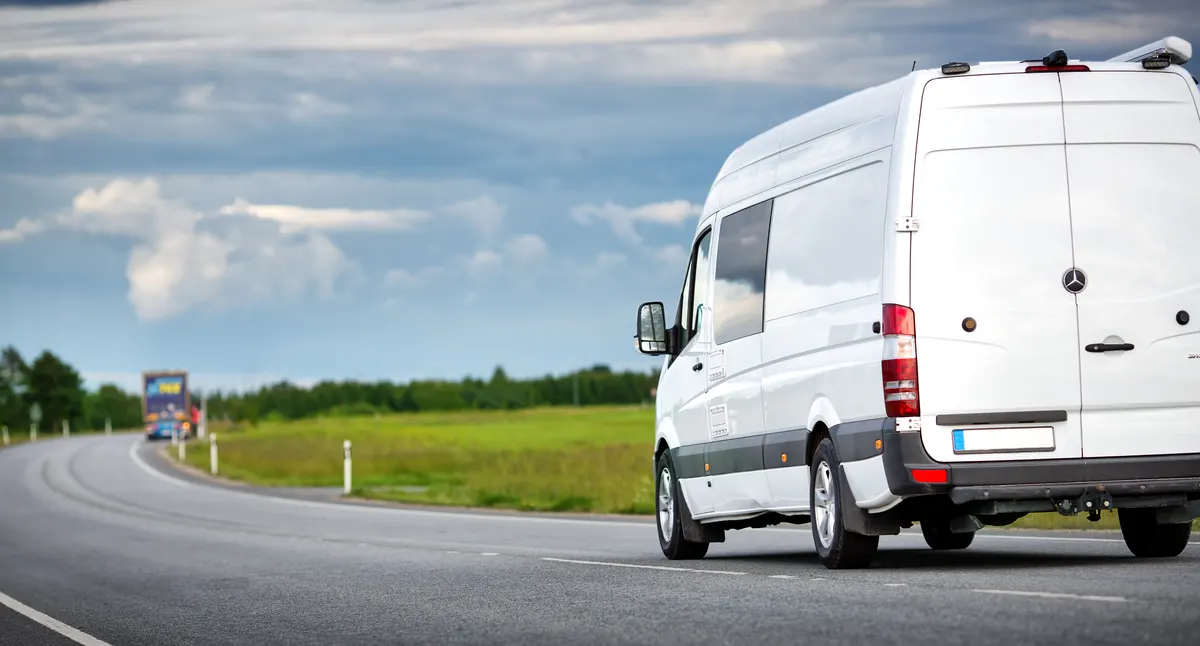
The Rhineland–Netherlands axis is one of the busiest heavy haulage corridors in Europe: machinery and plant components from North Rhine-Westphalia go to Dutch industrial sites or out into the world via the seaports of Rotterdam and Amsterdam. The distances are short – Düsseldorf–Eindhoven is a good 100 km, Rotterdam around 220 km – but short does not mean simple: a cross-border abnormal load needs permits in both countries and a properly surveyed route. Oversize Transports organises the DE–NL corridor as one continuous project.
Typical loads on the NL corridor
- Machine tools and presses from Rhineland mechanical engineering
- Plant modules and vessels for industrial and port sites
- Project cargo for seaport export: pieces going onto break-bulk or RoRo vessels in Rotterdam or Amsterdam
- Transformers and power equipment up to 200 tonnes per piece
Permits: StVO §29 meets the RDW Ontheffing
On the German side, the permit requirement under German road traffic regulations (StVO §29) applies once the standard dimensions are exceeded – for instance 2.55 m width, 4.00 m height or 40 t gross weight. In the Netherlands, the RDW issues the exemption permit (Ontheffing) for oversize and heavy transports; the Dutch conditions on dimensions, escorting and driving times differ in detail from the German ones. Both permits must match in timing and routing. We apply for them in parallel and align the escort vehicle conditions of both countries – including BF3 escorting on the German section where prescribed.
Road tolls and the Eurovignette
Road usage belongs in the cost calculation as well: Germany levies the distance-based truck toll, the Netherlands the time-based Eurovignette for heavy goods vehicles. For abnormal loads requiring permits, fees for the authorisations and, where applicable, administrative conditions are added. These items are included in our fixed-price quotation – you calculate with one figure, not with supplements.
Port delivery Rotterdam and Amsterdam
Seaport deliveries have their own rules: terminal slots, notification deadlines, in-port traffic routing and the handover to the crane or handling company. We coordinate the delivery with the terminal, phase the transport onto the vessel's loading window and, on request, organise crane and loading coordination at the dispatching plant. This turns factory gate to ship's rail into one continuous chain with one person responsible.
Process and lead time
After your enquiry with dimensions, weight and loading/unloading point, we survey the feasibility of the route across the border crossings, for example via the A61/A40 or A3, including bridge loads and headroom. You then receive a fixed-price quotation. For straightforward oversize transports, one to three weeks of lead time is often enough; heavy pieces with structural assessments need longer. During the transport, your personal project management is reachable around the clock.
Border crossing and route selection
For abnormal loads heading to the Netherlands, several motorway crossings are available – for instance via the A40, A3, A61 or A52. Which route is driveable is decided not by kilometres, but by bridge loads, roadworks and the conditions of both permits. In the Ruhr area in particular, bridges in need of refurbishment noticeably restrict route selection for high axle loads; the feasibility study clarifies which crossing is the right one for your piece.
These details speed up your quotation
For a solid fixed-price quotation we need:
- Dimensions, weight and centre of gravity of the cargo, ideally with a drawing
- Loading and unloading point – for port delivery, the terminal and booking reference
- Desired time window; for seaport export, the vessel's loading window
- Crane requirements at the dispatching or receiving point
Return traffic from the Netherlands
The corridor works in both directions: import pieces from Rotterdam or Amsterdam – machinery from overseas or port handling equipment, for example – we bring to NRW and beyond with the same permit and escort logistics. Anyone running regularly benefits from surveyed routes and established contacts with the authorities on both sides of the border. For recurring lanes we also examine whether long-term permits or bundled applications reduce the administrative effort per transport – which makes series traffic more predictable and more economical. And if a piece does exceed the limits of the road after all, we consider the alternative straight away: inland vessel via the Rhine with a short road leg at the end.
Are you planning a machinery or plant transport to the Netherlands? Contact us on +49 (0)30 2000 8 49 49 or hsnk@zammad.com – we survey your route, handle both permit procedures and quote you a fixed price with a reliable date.