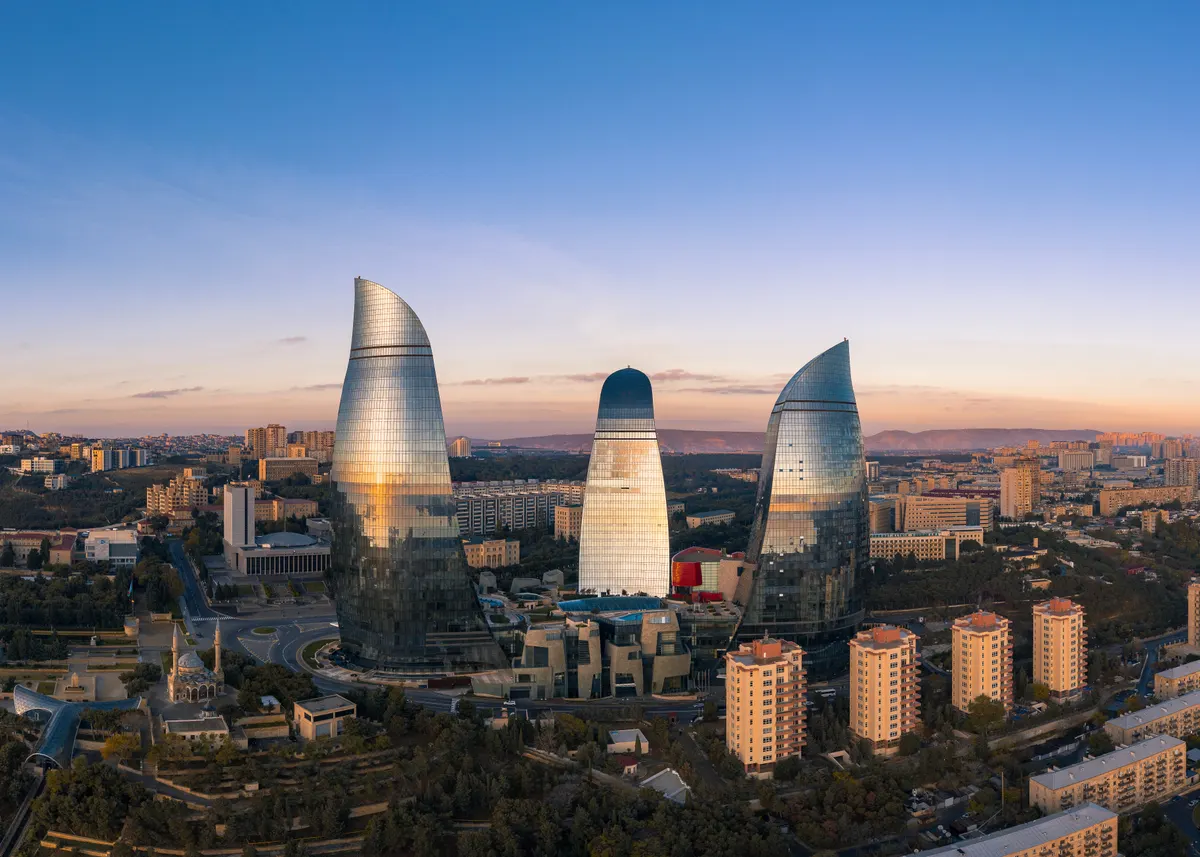
How does a heavy haulage transport from Rotterdam to Baku work?
A heavy haulage transport from Rotterdam to Baku starts at Europe's largest seaport and runs via the Middle Corridor through the Netherlands, Germany, the Balkans, Turkey and Georgia to Azerbaijan. The total distance is around 5,500 km; the lead time runs to several weeks, because in addition to the pure driving time, the permit chains and border handling of several countries have to be planned for. Transit through Russia is deliberately avoided – the Middle Corridor is the established alternative into the Caucasus.
Oversize Transports plans lanes from all over Europe as a closed project: feasibility, routing, equipment selection, permits, escorting and customs from a single source – regardless of whether the cargo starts in Germany or, as here, at a Benelux port.
Permits from the Benelux port
Unlike with a German starting point, the permit chain here begins in the Netherlands with its own special permit (Ontheffing). Only for the German section does the special permit under StVO §29 via the VEMAGS portal apply. The national permits of the Balkan states, Turkey, Georgia and Azerbaijan then follow. Every country runs its own procedure with its own axle load limits, deadlines and escort requirements, which we build into the timeline.
Customs: T1 and TIR across several borders
Since several non-EU countries are crossed from Serbia onwards, the consignment moves under a transit procedure – as T1 from the EU external border and/or under a TIR carnet along the entire route. TIR reduces the checks at the intermediate borders; import clearance takes place in Baku. Packing lists, value and origin declarations are prepared in advance so that they are consistent at every border.
Equipment selection and load securing
For the winding sections in Eastern Anatolia and the Lesser Caucasus, steered axle lines, sufficient ground clearance and – in case of excess height – clearance profiles surveyed in advance are decisive. Heavy single pieces run on low-bed or modular axle trailers; our overview of equipment shows which unit fits. Load securing is carried out by positive and frictional locking in line with recognised engineering standards.
Escorting in the Caucasus corridor
Depending on dimensions, we escort the transport with our own escort vehicles up to BF3/BF4 escort; in individual countries an official or police escort is additionally mandatory, which we coordinate through local partners. This lane is part of our heavy haulage transports to Azerbaijan and can be extended as far as Central Asia via the Caspian ferry if required.
Why starting from Rotterdam is an advantage
Rotterdam is the interface between overseas sea freight and European overland transport. Oversize goods arriving in Europe by vessel can be taken over directly at the quay and moved onto the overland route without intermediate storage. We align the cargo handover with the terminal so that the long overland run via the Middle Corridor begins without standing times.
Feasibility study as the first step
Before dispatch, we clarify feasibility: weight, length, width, height and centre of gravity determine the axle load distribution and the vehicle type. For the mountain legs in the Lesser Caucasus we calculate gradeability, curve radii and ground clearance with particular care; the route is checked for bridge load capacity and clearance profiles before the permit chain is triggered.
Time windows across several countries
From Rotterdam to Baku, the night driving and weekend restrictions of five or more countries interlock. We schedule the legs so that arrivals at the Kapıkule, Sarp and Red Bridge borders fall within service hours and standing times are minimised. On the long Caucasus chain, this fine planning matters more than the pure mileage.
Oversize Transports as an independent project partner
As a brand of HSNK s.r.o. from Prague, Oversize Transports organises the Rotterdam–Baku lane independently and end to end – from feasibility through to unloading, without transit through Russia. Enquire about your project by phone or via the enquiry form; we check feasibility and align the permit chain.
Typical cargo types on this lane
Via the Middle Corridor to Baku we frequently move plant components for oil, gas and energy, transformers, pressure vessels, construction machinery and industrial modules. Such goods often bring excess weight, excess height or an unfavourable centre of gravity, which shape the vehicle concept. We match trailer, axle lines and securing equipment exactly to the individual piece and document dimensions and condition before departure, so that the permit and customs data remain consistent along the entire chain.
Insurance and risk management
Heavy cargo across the Caucasus corridor calls for suitable transport insurance and a clear average concept. We align cover, value declarations and handover points – from the quay in Rotterdam through to unloading in Baku – individually with each project, so that in the event of damage, responsibilities and handling are unambiguously defined.