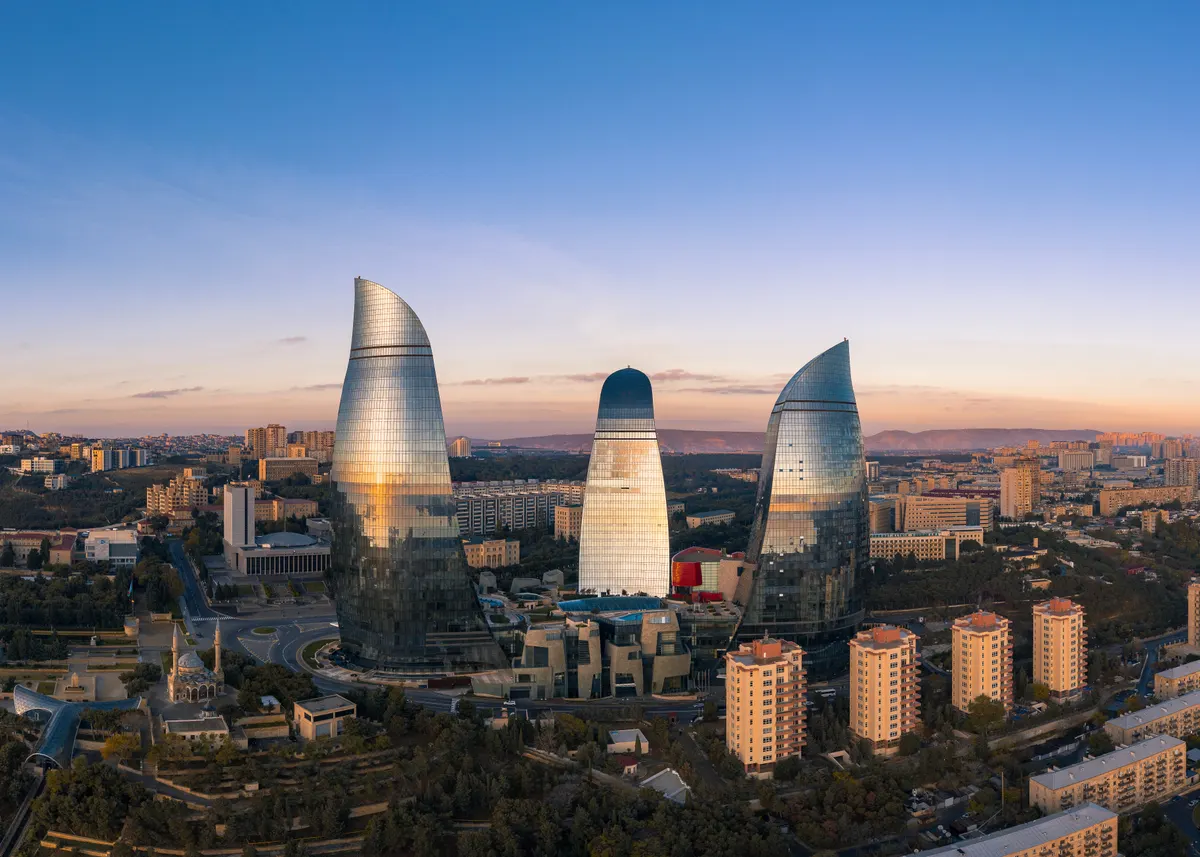
Romania to Baku: the short way across the Black Sea
The heavy transport from Romania to Baku is one of the shorter Caucasus lanes in our portfolio – provided the sea passage across the Black Sea is used. From the port of Constanța the cargo travels by RoRo or ferry to Poti or Batumi in Georgia and from there overland via the “Red Bridge” to Baku in Azerbaijan. This avoids long mountain stages through Anatolia. Alternatively, the complete overland route via Turkey is possible; it measures around 2,500 to 3,000 km and connects to the Middle Corridor. In neither case is Russia crossed.
Oversize Transports plans both variants as a complete project and selects the route according to item size, ferry capacity and timeframe.
Sea or land: the routing decision
The sea route from Constanța shortens the overland leg considerably and is gentler on the cargo, but it requires available RoRo capacity and suitable sailings. For very heavy or bulky items, clearance on board must be settled in advance. The overland route via Turkey is independent of ferry windows, but runs across mountainous sections in Eastern Anatolia with tight turning radii and height restrictions. We compare both options on the basis of weight, dimensions and deadline and settle on the more robust variant.
Permits and customs
The Romanian section of the route is covered by the national special permit for heavy transports; the German §29 StVO rule (German road traffic regulations) only applies if a German section of the route were touched, which is not the case on this lane. Georgia and Azerbaijan each require their own national permits. On the customs side, the consignment travels as T1 from the external EU border or under a TIR carnet; on the sea route, the cargo is transferred into road transport at the port of Poti or Batumi. Import clearance takes place in Azerbaijan.
Equipment selection and load securing
On the sea route, the cargo requires particular securing for RoRo loading and the crossing; on the overland route, what counts is the equipment selection with steered axle lines and sufficient ground clearance for the Anatolian mountain sections. Heavy single items are loaded onto low-bed or modular axle trailers and secured by positive and friction locking in line with recognised engineering standards – lashed, chocked and braced against tipping.
Escorting and time windows
Depending on the excess dimensions, we accompany the transport with escort vehicles up to BF3/BF4 escort; in Georgia and Azerbaijan an official escort may additionally be mandatory. On the sea route, the RoRo frequency sets the time window; on the overland route it is the driving-time restrictions and border opening hours in Turkey and the South Caucasus. We interlock these windows with the permit chain.
Baku as a strategic destination
Baku is both the end point of the overland route and the port of departure for onward shipment across the Caspian Sea towards Kazakhstan and Turkmenistan. Country-specific requirements can be found on our page on heavy haulage to Azerbaijan. This lane is part of our international heavy haulage services.
Feasibility study as the first step
It all begins with the technical review: weight, length, width, height and centre of gravity of the cargo determine the axle load distribution, the vehicle type and – on the sea route – the required RoRo capacity. The overland section from Poti or Batumi to Baku is checked for bridge capacity and clearance profiles. Only once route, equipment, ferry and permit requirements fit together does the project move into execution.
Oversize Transports as an independent project partner
Oversize Transports is the brand of HSNK s.r.o., based in Prague, and acts as an independent heavy haulage forwarder. For the Romania–Baku lane we combine feasibility, route comparison, permits, escorting and customs in one hand – whether via the Black Sea passage or overland. Send us your project by phone or via the enquiry form; we check feasibility and recommend the more robust route.
Typical cargo types on this lane
From Romania to Baku we regularly move plant components for the oil and gas industry, transformers, boilers, vessels and construction machinery. These goods often carry excess dimensions or a high point load that determine the trailer, axle load distribution and – on the sea route – the RoRo loading. We select the equipment precisely to match the item, document condition and dimensions before departure, and make sure that all permit and customs data are consistent across the land and sea legs. Whether a single oversize machine or a complete plant delivery: we cost every Caucasus lane individually and accompany it from the first feasibility study to unloading in Baku.
Insurance and risk management
Heavy cargo across the Black Sea passage calls for suitable transport insurance and a clear contingency concept. We align cover, declared values and responsibilities so that in the event of damage, handling and accountability are unambiguously defined.